
Safety & Awareness
Skier & Rider Safety Policies
At Sunlight Mountain, we’re committed to creating a safe and enjoyable experience for all skiers and snowboarders. Every season, we implement a variety of proactive safety measures designed to educate our guests and employees on how to have a safe, fun-filled day on the slopes and throughout the resort.
By taking the time to educate yourself, your friends, and your family, you’re contributing to a safer, more seamless, and enjoyable mountain experience for everyone. Below, you’ll find essential resources that outline the key points of skier and rider responsibility, helping ensure your time at Sunlight Mountain is both safe and unforgettable.
Know the code
Safety is a shared responsibility. Every skier and rider plays a crucial role in keeping our mountain safe. Under the Colorado Ski Safety Act, it’s your responsibility to ski or ride within your ability, maintain control of your speed and direction, avoid collisions, and follow all posted signs and closures.
Get started by understanding and practicing the Skier & Rider Responsibility Code.
Safety On the Snow
Safety is at the heart of every aspect of skiing and snowboarding. Whether it’s choosing the right gear, riding the lift properly, or progressing your skills on new terrain, there’s plenty of expert guidance on how to do it all safely.
To help you ride with confidence for years to come, we’ve compiled a list of essential topics and resources. No matter your skill level or discipline, these tools are designed to educate and empower you, ensuring that every trip to the mountain ends with a smile.
Have a question or a topic that you don’t see represented here? Please contact us at info@sunlightmtn.com.
Sunlight Mountain Policies
Collision Prevention
It’s important to remember that we are sharing the slopes with skiers and riders of all different ages, abilities, and sizes. Your awareness of those around you and of the surrounding environment, as well as responsible skiing and riding, are the best ways to reduce the risk of a collision between you and another skier or with an object.
Tips for Avoiding Collisions
- Be Ready: Be ready to slow down and avoid objects or people at any time. You should always be able to control yourself and your speed regardless of conditions.
- Stay Alert: Stay alert to what’s going on around you, especially with other skiers and riders in the area.
- Plan Ahead: Ease up at blind spots, check uphill when trails merge, slow down at lift and base areas, and give others plenty of room when passing.
Lift Safety
Winter Lift Safety for Skiing and Snowboarding
It’s important (and part of Your Responsibility Code) to know how to load, ride, and unload all lifts safely. Knowing how to ride the chairlift will make your day more fun and safe.
Not sure how to ride the lift? Ask an Attendant, Ski Patroller, or other Sunlight employee for help.
Tips for Riding Lifts Safely
- Be familiar with the type of lift you are riding and what type of terrain it will bring you to.
- Avoid distractions in the lift line. Put down your phone, pay attention to the Lift Operators and Attendants, and stay focused.
- Before loading, remove backpacks and secure loose items. Remove pole straps from wrists and make sure your bindings are correctly fastened.
- Before moving out to load the chair, make sure everyone in your group is ready and the Operator is ready for you.
- Look over your shoulder to watch the chair approach. Turn towards the closest bar on the chair. On our Terecero Lift, that’s toward the outside of the chair. On Segundo and Primo, that’s toward the inside.
- Sit all the way in the chair, flush with the seat back. Lift your ski tips or nose of your board slightly to avoid your equipment from catching in the snow.
- Be aware of your surroundings while riding the lift. If you drop something, let it fall. You can ask Ski Patrol or the Lift Attendants at the top for help retrieving the item.
- As you approach the top terminal, prepare to unload the lift. Signs leading up to the top will prompt you with instructions for unloading the lift.
Uphill Travel Policy
Sunlight Mountain allows uphill foot and skier traffic along designated routes during the winter operating season, including the pre-season and post-season. However, uphill travel is closed while snowmaking operations are underway and other times as deemed necessary for guest and employee safety.
Please help us keep you and our employees safe and preserve our growing Uphill Community by abiding by our rules and any mountain closures throughout the year.
Sunlight Mountain Uphill Policy
- All guests must possess a current Sunlight Uphill Pass. These passes can be obtained at the Sunlight Ticket Office or on our Online Store.
- Uphill access is closed during snowmaking operations. Pressurized waterlines can be hard to see in the snow, but skis and snowboards are sharp enough to slice through the lines, posing a large safety risk to anyone nearby.
- Never follow directly behind or ski in front of a grooming machine. Keep a minimum of 100 feet away from grooming machines, snowmobiles, and snowmaking equipment.
- Dogs are not allowed on the mountain at any time.
- Use the designated uphill routes. Uphill route maps can be obtained at the Guest Services Office.
- Keep to the side of the trail. Downhill traffic has the right-of-way.
- Be aware that there are no Ski Patrol services before or after normal operating hours.
- Any guests accessing the Sunlight Mountain property outside of normal operating hours acknowledge that activities, such as slope grooming, snowmaking, snowmobile traffic, special event setup, and marked and unmarked obstacles may exist on any slope at any time.
Terrain Park Safety
Be Park SMART!
Whether you’re skiing or snowboarding, being Park SMART will reduce your chance of getting hurt.

Park SMART Terrain Park Safety
- Start Small: Work your way up and build your skills.
- Make a Plan: Plan every feature, every time.
- Always Look: Make sure to look up- and down-hill of you before you drop. Remember: our terrain park has two entrances.
- Respect: The features, conditions, and other skiers and riders.
- Take it Easy: Know your limits and land on your feet.
Other Tips:
- On your first visit of the day, always ski or ride through the terrain park to look at the features and conditions. Watch how other, experienced skiers and riders interact with the rails, jibs, and jumps.
- Consider taking a lesson when trying new skills.
- All of our features and jumps have the option to ride around or avoid them, in case you are not comfortable using that feature.
- Once you have used a jump feature in a terrain park, clear out of the landing area quickly to allow room for the next skier or rider.
Tree Wells & Deep Snow
Riding off groomed runs exposes you to the danger of tree wells and deep snow incidents.
Skiing and snowboarding in deep powder is one of the most exciting and appealing parts of our sport. However, if you decide to explore off the groomed runs, it is important to understand the risk of a deep snow immersion incident.
A deep snow or tree well immersion occurs when a skier or rider falls into an area of deep, loose snow and becomes immobilized and trapped under the snow. Breathing becomes difficult as snow fills in around them, especially if they’ve fallen head-first. Without immediate help, they may suffocate.
Always ski or ride with a partner within viewing distance of you. Make sure to have Ski Patrol’s number handy so you can call for help immediately. You can reach the Sunlight Ski Patrol Dispatch at (970) 947-5149.
Helmet Safety
We urge all participants to wear a helmet, but to ski or ride as if they are not wearing one.
Whether you’re an experienced rider or just hitting the slopes for the first time, wearing a helmet can make all the difference in enjoying your time on the mountain and getting home safely.
While helmets can help reduce injury in an incident, they don’t prevent all injuries, especially from high-speed impacts or collisions with obstacles. Always ski or ride within your ability, stay alert, and follow safety guidelines. Remember: a helmet is just one part of staying safe on the slopes.
Parking Lot Safety
When you arrive at a ski area parking lot, you should anticipate winter conditions, including snow, rain, ice, sleet, and generally slick conditions, often in low-visibility conditions. Allow yourself extra time and walk with extreme caution, keeping your head up and your hands out of your pockets for balance. Do not carry too much equipment and wear suitable winter footwear with traction.
Know Before You Go
Tips for a Safe Visit to Sunlight Mountain
Trying a new sport or visiting a new ski area can be daunting. Visiting this page is already a great first step to ensuring that you make the most of your time at Sunlight Mountain and do it safely!
- Read Your Responsibility Code to ensure that everyone in your group and those skiing and riding around you can enjoy the mountain for years to come.
- Never skied or boarded before? There’s no better way to get started than taking a lesson. Our Professional Instructors will get you started on the right foot.
- Understand trail signage. The colored symbols next to the trail names are key to enjoying the mountain. Their shape and color indicate the difficulty of the trail. While we want you to challenge yourself and have fun, make sure you choose a trail that is within your ability level.
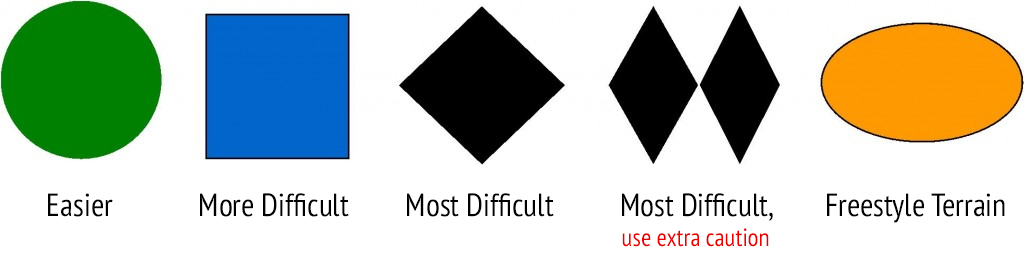
- Before you ride a lift, make sure you can handle the trails at the top. Not every lift will have an easy way down. Not sure? Ask the Attendants before you load.
- When you arrive at Sunlight Mountain, our Lift Ticket Office and Guest Services Office will have paper Trail Maps that you can take with you on the Mountain.
- Not sure what to wear for your day on the slopes? There is a lot of gear available, so it can be challenging to decide what to wear. However, the most important piece of advice we can offer is to prioritize function over fashion. Make sure you are choosing gear that will keep you warm and dry while here at Sunlight.
More Resources
Below, we’ve included more resources to help you get ready for your time on the slopes at Sunlight Mountain.
Additional Resources
- National Ski Area Association (NSAA): Safety Programs
- National Ski Patrol
- Ski Safety US
- Kids on Lifts: Lift Safety for Kids & Families
- Lids on Kids: Helmet Safety for Kids & Families
- Avalanche Awareness
- Avalanche Hazard Rating & Education
- Tree Well and Snow Immersion Safety
- Terrain Park Safety
Safety FAQs
Is it safe to ski?
To make skiing and riding as risk-free as possible, make sure your equipment is in good condition; wear a helmet and goggles; wear appropriate layers of clothing; ski within your ability; obey warnings, closures, and other signs; ski with a partner; take a lesson to learn some tips from a pro! There are inherent risks of skiing and riding. To see a detailed list of risks, please refer to the Colorado Ski Safety Act.
Does Sunlight Mountain allow ski bikes?
Sunlight Mountain allows alpine skis, telemark skis, snow blades (with tethers), snowboards, snowskate (with tether), and approved adaptive equipment. Please contact Sunlight for assistance with adaptive ski/riding equipment.
Is it safe to ride the chairlift?
It is important to learn how to load, ride, and unload a chairlift correctly. If unfamiliar with the lifts at Sunlight, please ask the lift attendant for assistance.
What should I do if I or someone with me gets hurt?
You can reach the Sunlight Ski Patrol Dispatch at (970) 947-5149.
If your cell phone is not available, a report can be made to the lift operator at the nearest ski lift. Cross-skis uphill from the injured person, if possible, to mark the location of the injured party and keep other guests from running into the injured.
What do I do if I cannot make it down the slope?
You can reach the Sunlight Ski Patrol Dispatch at (970) 947-5149.
Ski Patrol can help get you down to the bottom should you become too tired, feel ill, too frustrated, or have equipment issues. Please be aware that it is unlikely a snowmobile will be used for transport.
What is a green trail?
A green circle on a ski trail sign designates an easier trail. Green trails are less steep than other trail designations. Green trails are available to all users and recommended for beginner skiers and riders.
What is a blue trail?
A blue square on a ski trail sign designates a more difficult trail. Blue trails are steeper than Green trails.
What is a black trail?
A Black diamond on a ski trail sign designates the most difficult trails. Black trails are steeper than Blue trails and are not always groomed, leaving bumpy conditions known as moguls. A double black diamond trail designates extreme terrain suitable for expert skiers and riders.
Is it safe to ski in the trees?
Skiing and riding have inherent risks as described in the Colorado Ski Safety Act. Some participants enjoy going through the trees. It is recommended that you do not ski in the trees alone; steer clear of tree wells and stay in control. When rejoining a groomed trail, please look up and yield to the traffic on the open trail. Do not ski through the trees to access a closed trail. It is important to be familiar with the Skier Responsibility Code.
Is it safe to ski outside of the resort boundary ropes?
The areas outside the resort boundary are not patrolled. Should a skier/rider get injured outside the resort boundary, Search and Rescue will be called to assist. Leaving the ski area boundary can be confusing and may not end in a public area. Hiking may be required to get back to the ski area.
Am I required to wear a helmet?
A helmet is not required for skiing/riding at Sunlight (requirements may differ if taking a ski or snowboard lesson – please check with our Ski/Ride School for requirements). We do recommend a helmet to protect your head from injury.
Do I need a pass to go uphill?
A Sunlight Uphill Pass is required to use the designated uphill routes at Sunlight Mountain. Sunlight Ski Area is partially on private land and partially on land that we lease from the Forest Service. As part of our lease agreement with the Forest Service, a pass is required to recreate on this property. Failure to obtain a pass is considered trespassing. Uphilling is prohibited during snowmaking operations.
Do I need a pass to uphill after business hours?
A Sunlight Uphill Pass is required at any time, day or night, open or closed on Sunlight Mountain. Failure to obtain a pass is considered trespassing. Uphilling to prohibited during snowmaking operations.
Why do I need a pass on forest service land?
Sunlight leases part of the ski area from the Forest Service. As part of the lease agreement, Sunlight reserves the right to govern this land in conjunction with the Forest Service. Please follow the policies and procedures stated by Sunlight Mountain.
Can I bring my dog skiing?
Dogs are not allowed on Sunlight Ski Trails. Service animals are allowed at the base area. For the health and well-being of your pets, please keep them off the ski trails. Sunlight has cross-country/snowshoe trails throughout Babbish Gulch that allow dogs all year round. Please clean up after your pet!
Can my family go sledding at Sunlight?
Sunlight DOES NOT allow sledding. This includes but is not limited to tubing, sliding on a snowboard, the Zibob device, and saucers.
Do I need sunscreen in the winter?
Sunscreen, when applied correctly and frequently, can assist with the strong rays of the sun from the sky and from the reflection on the snow. Especially at higher elevations. Sunscreen lotion can be helpful in preventing cold injuries such as frostbite as well.
What if my friend/child is missing?
You can reach the Sunlight Ski Patrol Dispatch at (970) 947-5149.
We have procedures to help locate missing persons! Do not move any vehicles. Leave a note on the vehicle for your missing party.
How long does it take to get down the mountain?
The time it takes to get down the mountain varies greatly. This depends on the trail or trails selected, the skiing/riding ability for you and your group, how many stops are taken to rest, enjoy the view, or take photos, and how tired you can be after a long day on the slopes! Our longest trail, Ute, is not highly recommended just before closing time.
How high is Sunlight? Can I get altitude sickness?
The base of Sunlight is at 7,885 ft. The peak of Sunlight ski area is 9,895 ft. above sea level. The altitude can affect anyone visiting Sunlight. Symptoms of altitude illness can include the following: Dizziness, headache, nausea, vomiting, shortness of breath with physical exertion, fatigue, and muscle aches. When visiting a higher altitude destination, it is recommended to rest for at least a day before moving to a higher altitude, drink plenty of water, eat food high in carbohydrates, and avoid alcohol and caffeine.
How come some trails are closed?
A trail may be closed for many reasons. Ski areas may close a trail due to a lack of snow coverage, a fallen tree in the trail, a race or event, avalanche mitigation, snowcat activity, or to provide medical assistance for a guest. The closure may only be temporary and could reopen later in the day. It is your responsibility to obey all closure signs and ropes. Accessing closed terrain may result in the loss of your skiing/riding privileges.
Do I have to take a lesson to learn to ski or snowboard?
Sunlight recommends that anyone new to the sport of skiing/riding take a lesson. A lesson can reduce the risk of injury. Lessons help learn how to stop, control your speed, load and unload a lift, and fall correctly. Lessons are not required but are highly recommended!
Can I ski with my child in a backpack?
In Colorado, all skiers and riders must know how to load, ride, and unload a lift safely. All guests must wear skis or a snowboard, or other allowed equipment. Sunlight Mountain does not allow children in a backpack on a chair lift.
Should I bring/wear a backpack?
Backpacks are handy to have while on the slopes. Guests can bring a backpack to carry water, snacks, lunch, tissues, sunscreen, extra layers, extra gloves, phone, wallet, keys…. If you choose to bring a backpack, it is highly recommended to take off your backpack and carry it on your lap when riding the chairlift. This reduces the risk of a strap getting caught on the chair and causing injury as a guest is unloading the chair lift.
Is the terrain park safe?
To reduce the risk of injury while enjoying features in a Terrain Park, think SMART!
S – Start small. Build your skills and work your way up to more difficult features.
M– Make a plan. Plan your moves for each feature, every trip.
A– Always Look. Look before you use a feature to avoid colliding with another guest.
R– Respect. Respect other users and the features.
T– Take it Easy. Ski and ride within your ability level. Know your limits. Land on your feet.
What ski and ride equipment is allowed on the mountain?
Skis, telemark skis, snowboards, snowskates, snow blades, carving boards, and adaptive ski equipment as approved. You must have a leash or another device (such as a ski brake) that stops any runaway equipment, including on your uphill ski or snowboard setup. You must maintain control of your equipment at all times.